What hiring managers in service jobs look for
The person reading your resume is usually the one who will work beside you: a kitchen manager, a general manager, a spa director, a fitness manager or an airline recruiter. They read quickly, often between shifts, and they look for the same few signals:
- The kind of place you worked. A 40-seat cafe and a 300-room hotel are different jobs. Name the concept or setting once per job: fine dining, a hotel banquet kitchen, a day spa, a large health club, a regional airline.
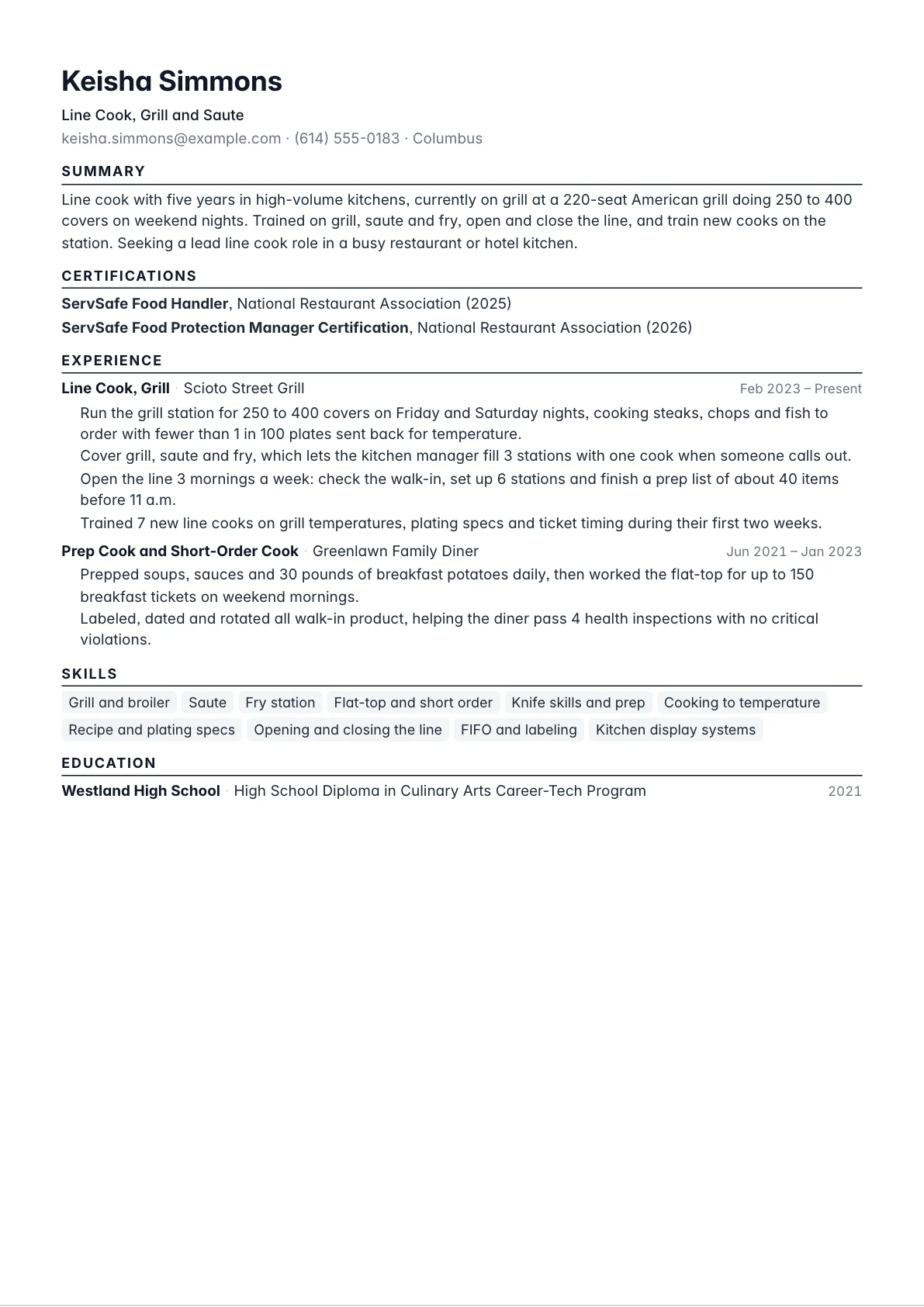
- Volume, in the numbers your workplace tracked. Covers, tickets, tables per section, treatments per week, sessions coached, passengers per flight. Ran the grill station for 250 to 400 covers on Saturday nights tells a manager how fast you work before they meet you.
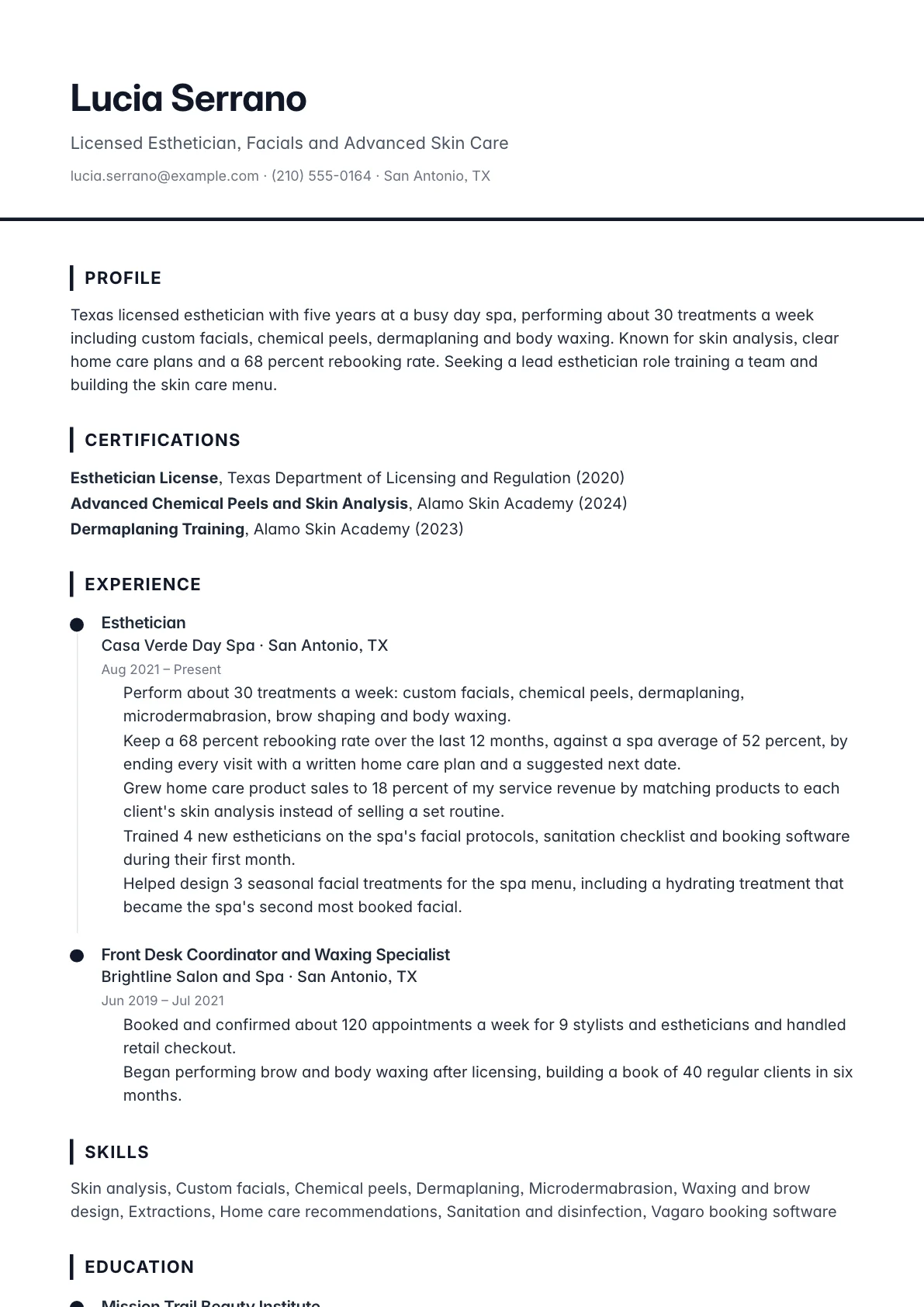
- Guests who come back. Rebooking rates, package renewals, regular clients and guest ratings are the proof that people liked working with you. They say more than the word friendly ever can.
- Safety and reliability. Clean health inspections, zero allergy incidents, a current CPR card, opening and closing on your own, covering holidays. Service jobs run on people who show up and follow the rules, so put that in a bullet.
Keep the layout plain and in one column. If you apply through an online form, a simple page reads correctly in the hiring system as well as on a manager's phone.
Cards, licenses and certifications by job
Few of these jobs need a license, but most ask for some kind of training, and the rules often depend on your state or city. Each example page explains its own requirements and links the official source. In short:
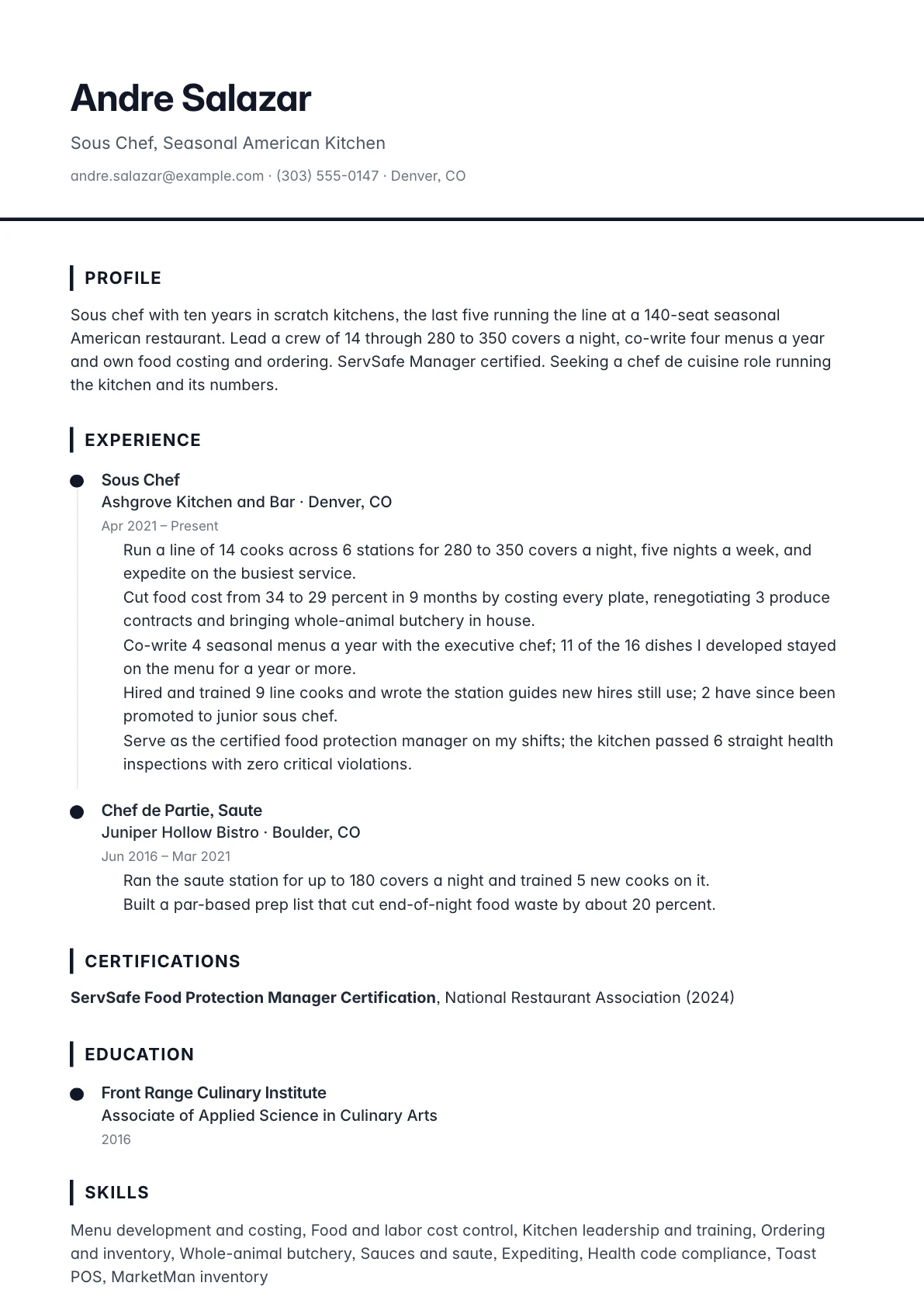
- Chef: no chef license. The FDA Food Code, a model that state and local regulators adapt, says the person in charge should be a certified food protection manager, such as ServSafe Manager. Your health department decides how that applies.
- Cook: no license, but some states and cities require food handler training soon after hire. Illinois and Texas, for example, generally allow 30 days as of September 2026.
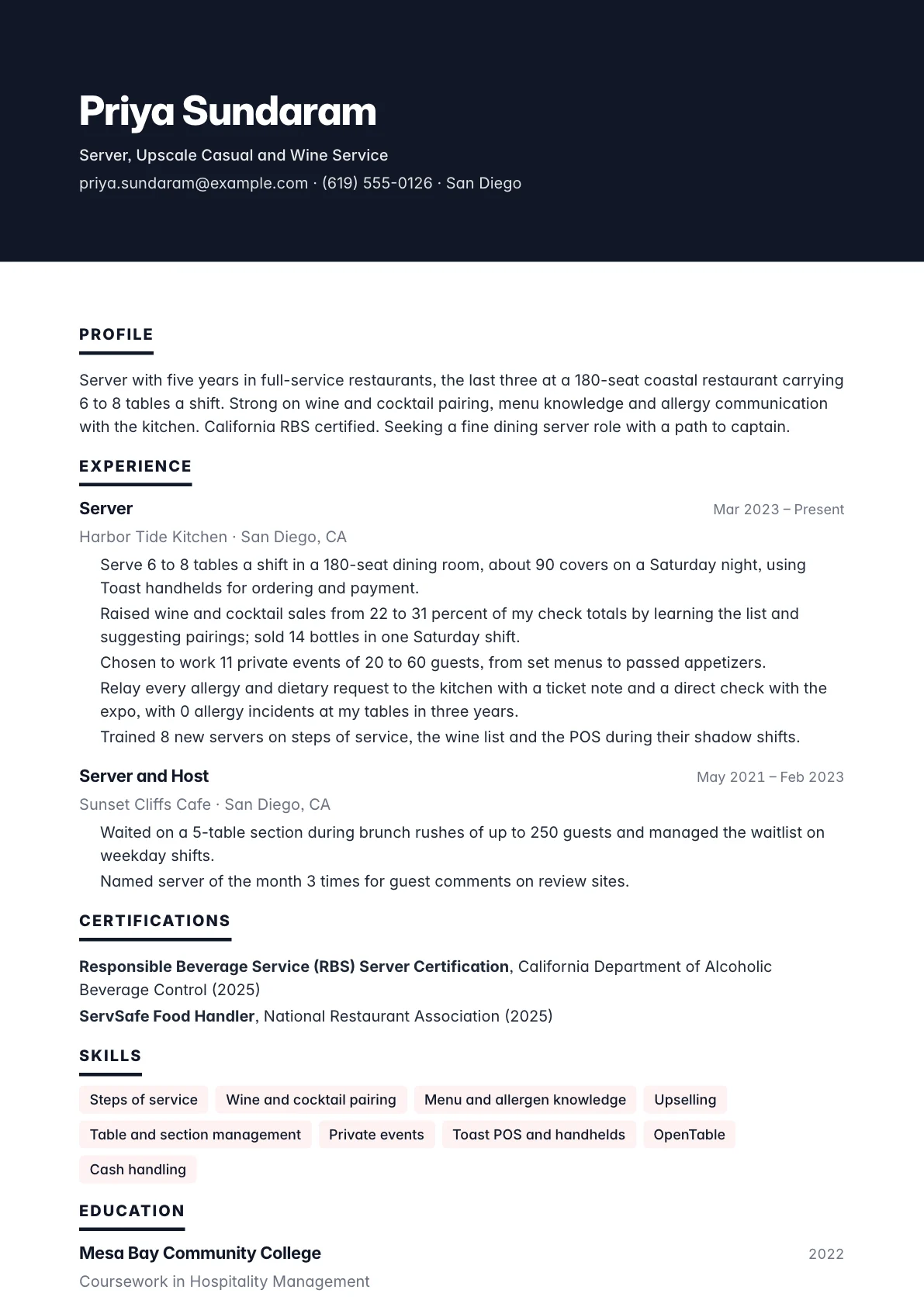
- Server: alcohol server training such as ServSafe Alcohol or TIPS, required by some states, counties and cities and by many employers, plus a food handler card where the health department asks for one.
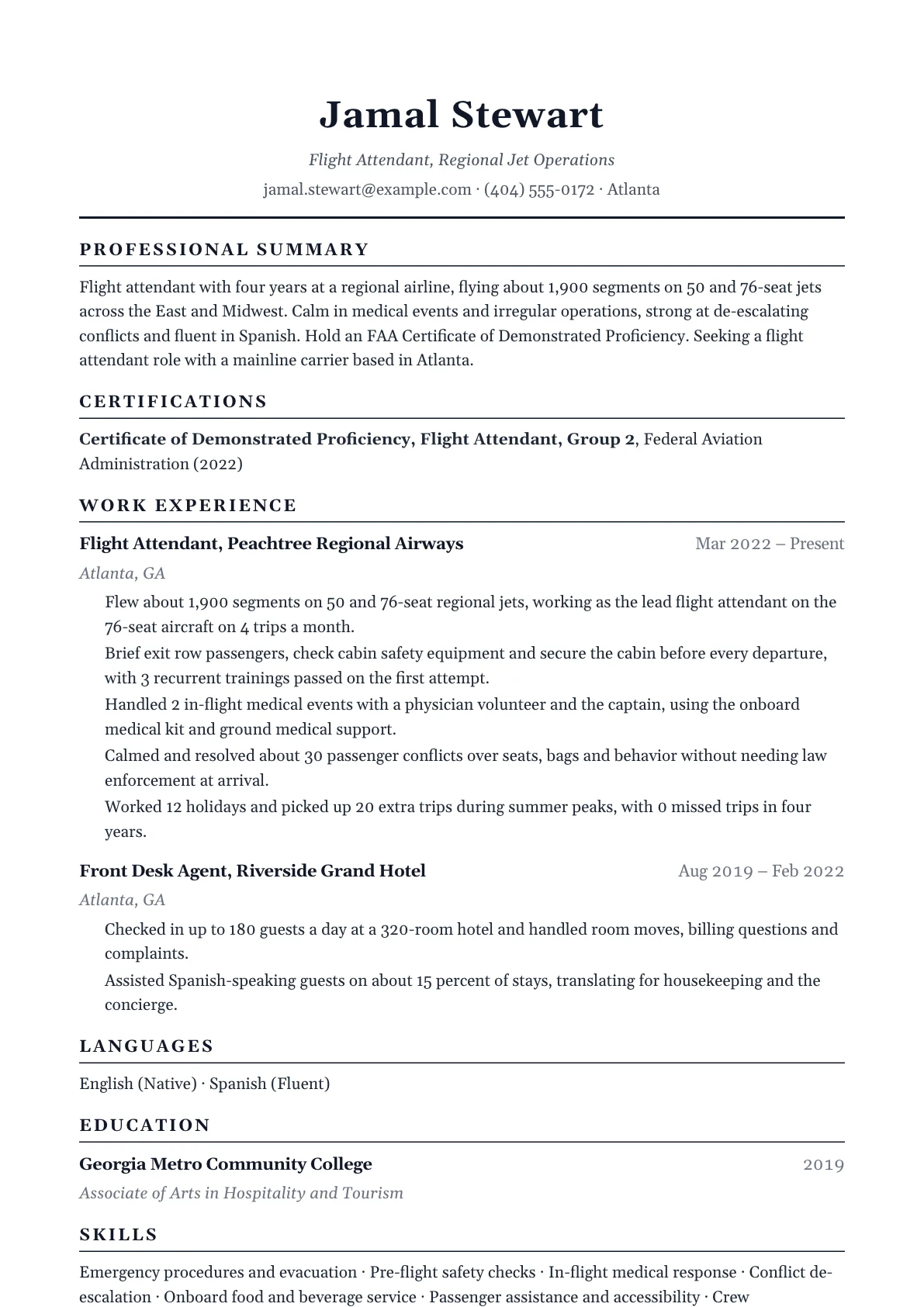
- Flight attendant: the FAA Certificate of Demonstrated Proficiency, which the airline applies for after you finish its training. You do not need it to apply.
- Esthetician: a state license from a board of cosmetology or licensing agency, with training hours and exams set by each state.
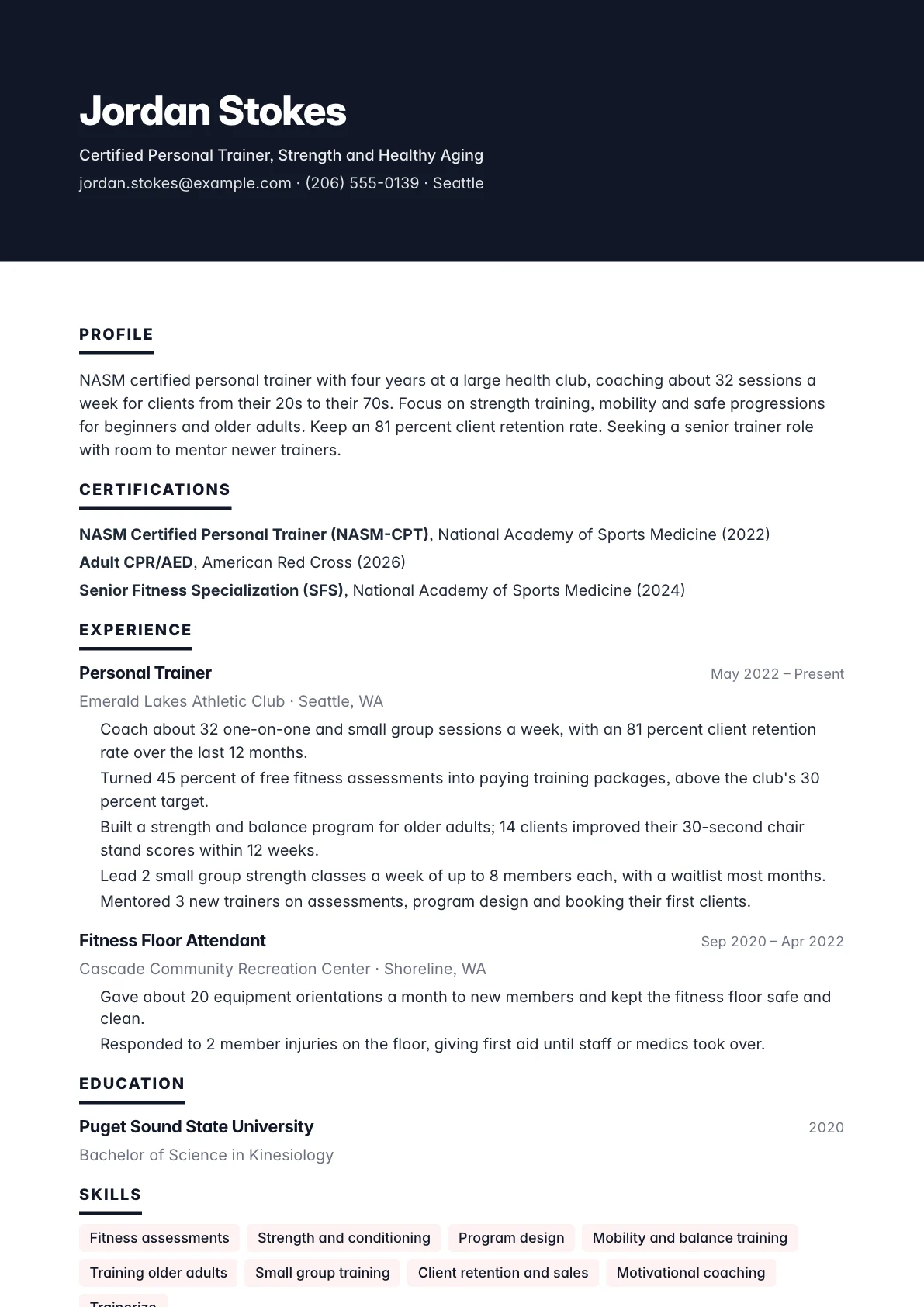
- Personal trainer: a certification, often one accredited by the NCCA, such as NASM, ACE, ACSM or NSCA, plus a current CPR and AED card, which those four bodies require.
Write each credential the way it is printed on the card, with the issuer and the year. A manager should not have to guess whether food safety certified means a handler card or a manager exam.
Which example should you start from?
Pick the job you want next, then borrow from its neighbors. Some common moves:
- From the line to running a kitchen. A cook ready for a sous chef role should start from the chef example, which is built around crew size, menus and food cost, and keep the station work as earlier experience.
- From restaurants to the cabin. Airlines value guest service at volume. The flight attendant example shows how a hotel or restaurant job becomes proof you can handle a full flight.
- Into a licensed or certified service job. Once you pass your exam, lead with it. The esthetician and personal trainer examples put the credential in the headline.
- Your first job in the industry. Hosting, bussing and counter work count. Pair the server or cook example with the first job resume guide, or the high school student guide if you are still in school.
- Leaving hospitality. Service skills move well into sales, healthcare and office work. The career change guide shows how to reframe shifts and covers for a new field.
Hospitality and personal care jobs in numbers
The U.S. Bureau of Labor Statistics projects employment in food preparation and serving occupations to grow about as fast as the average for all occupations from 2025 to 2035, with about 2.4 million openings a year, and reports a median annual wage of $35,050 in May 2025. For personal care and service occupations, which include skincare specialists and fitness trainers, it projects growth about as fast as average, about 714,700 openings a year and a median wage of $36,410. The median for all occupations was $50,980. Flight attendants are counted in a different group, transportation and material moving, so check their own row in the table above.
Frequently asked questions
What should I put at the top of a hospitality resume?
Your name and contact details, a headline naming the job and the kind of place you want to work, then a short summary with your years, your volume and any card or license the job needs. If the job requires a credential, give it its own section right after the summary.
How do I show customer service on a hospitality resume?
With numbers the business already tracks: guest ratings, repeat guests, rebooking or renewal rates, add-on sales and complaints resolved. One bullet like rebooked 68 percent of facial clients says more than a skills line about great customer service.
Should I list tips or tip income on my resume?
No. Managers cannot check it, and it says more about the room than about you. Use sales figures instead, such as wine share, average check or retail sold, along with covers and guest ratings.
Do I need a food handler card to work in a restaurant?
It depends on your state or city. Some require food employees to finish food handler training within a set time after they are hired, and others leave it to the employer. Your state or local health department has the rule, and the cook and server examples explain how to list the card.
How do I list short or seasonal restaurant jobs?
Keep the four or five most relevant ones, give months and years, and group seasonal work, such as three summers at a resort, under one entry. Restaurant jobs are often short, and a pattern of being asked back reads well.
Can I use hospitality experience to get a job outside the industry?
Yes. Handling rushes, calming upset guests, selling, training new staff and closing out a cash drawer all transfer to sales, customer support, healthcare and office roles. Describe them in the new field's words and keep the numbers.
How do I write a hospitality resume with no experience?
Lead with anything that involved serving people or working fast: school events, volunteering, babysitting, a family business, sports. Add any food handler, alcohol server, CPR or first aid training you hold, list the days and hours you can work, and aim the summary at one entry-level job.
Should a hospitality resume include a photo?
No. A photo is not expected on a US resume, and it can confuse online application systems. If you want to show plating, treatment results or your work style, link a portfolio or bring it to the interview.
Where do the pay and outlook figures come from?
From the U.S. Bureau of Labor Statistics Occupational Outlook Handbook, and from O*NET OnLine when the handbook does not profile a job. Each example page links its exact source and shows the month the figures were checked.
Build your hospitality resume
Open any example above, or begin with a blank page. It is free, you do not need an account, and your PDF downloads without a watermark.
Build your resume, free