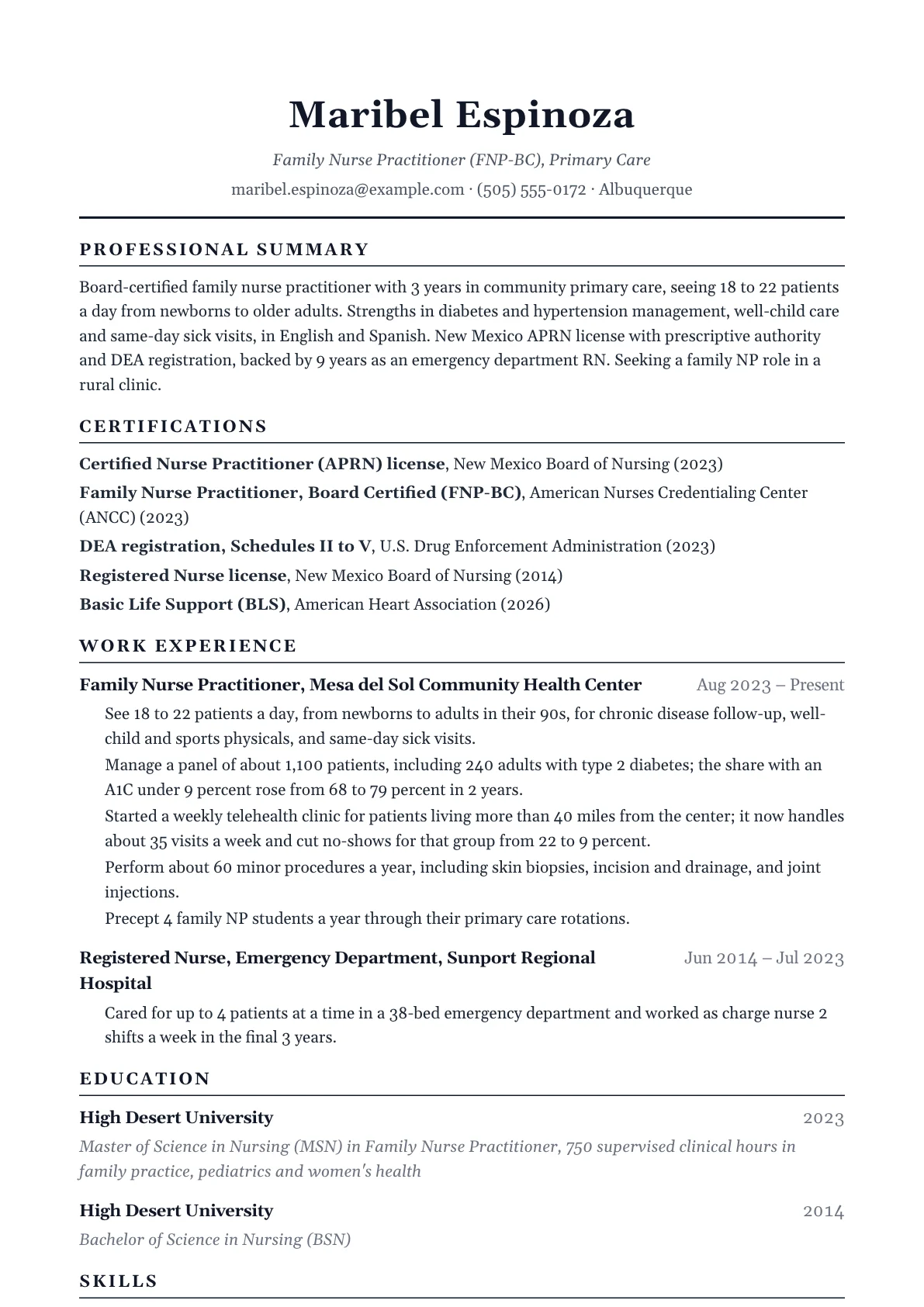
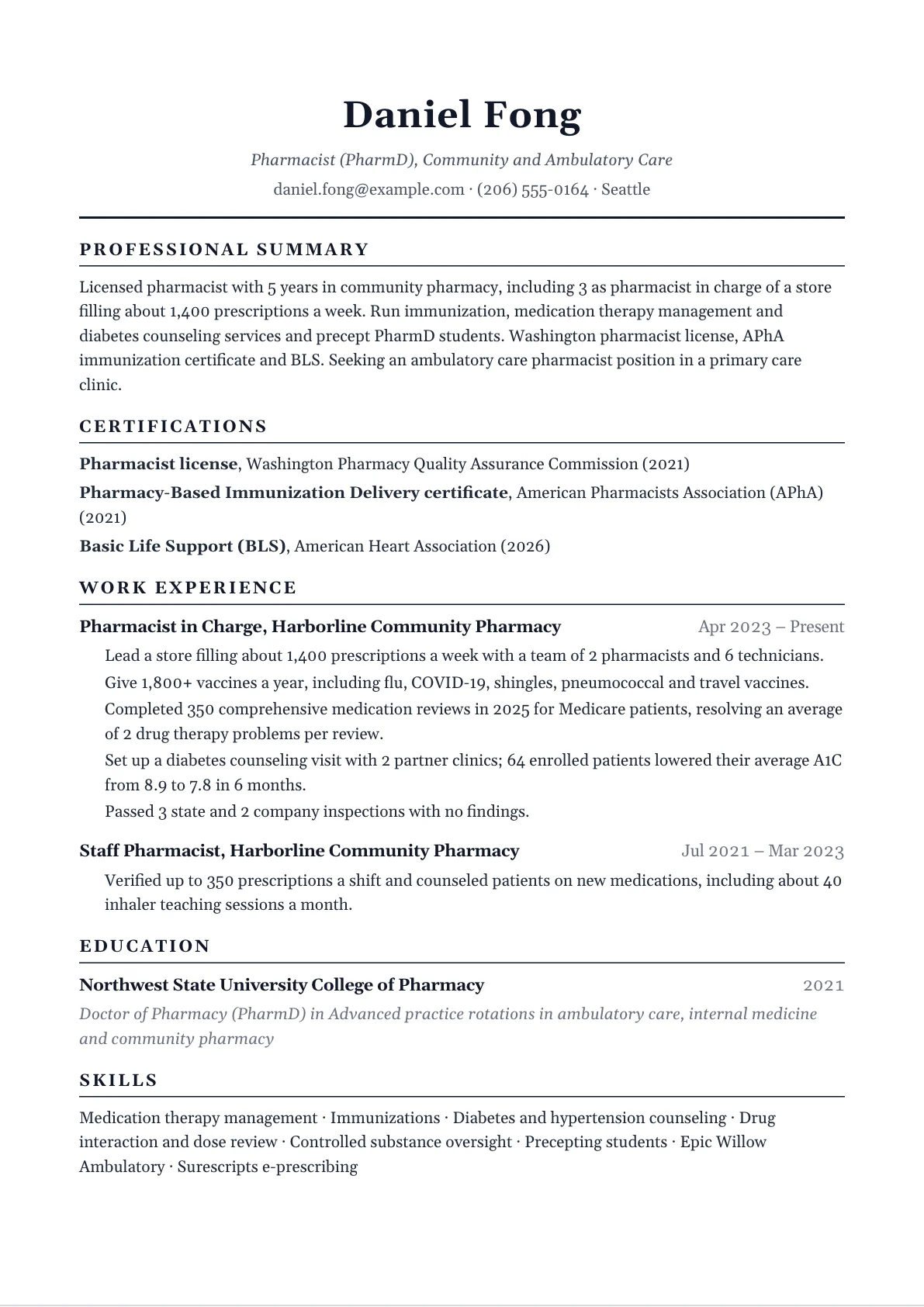
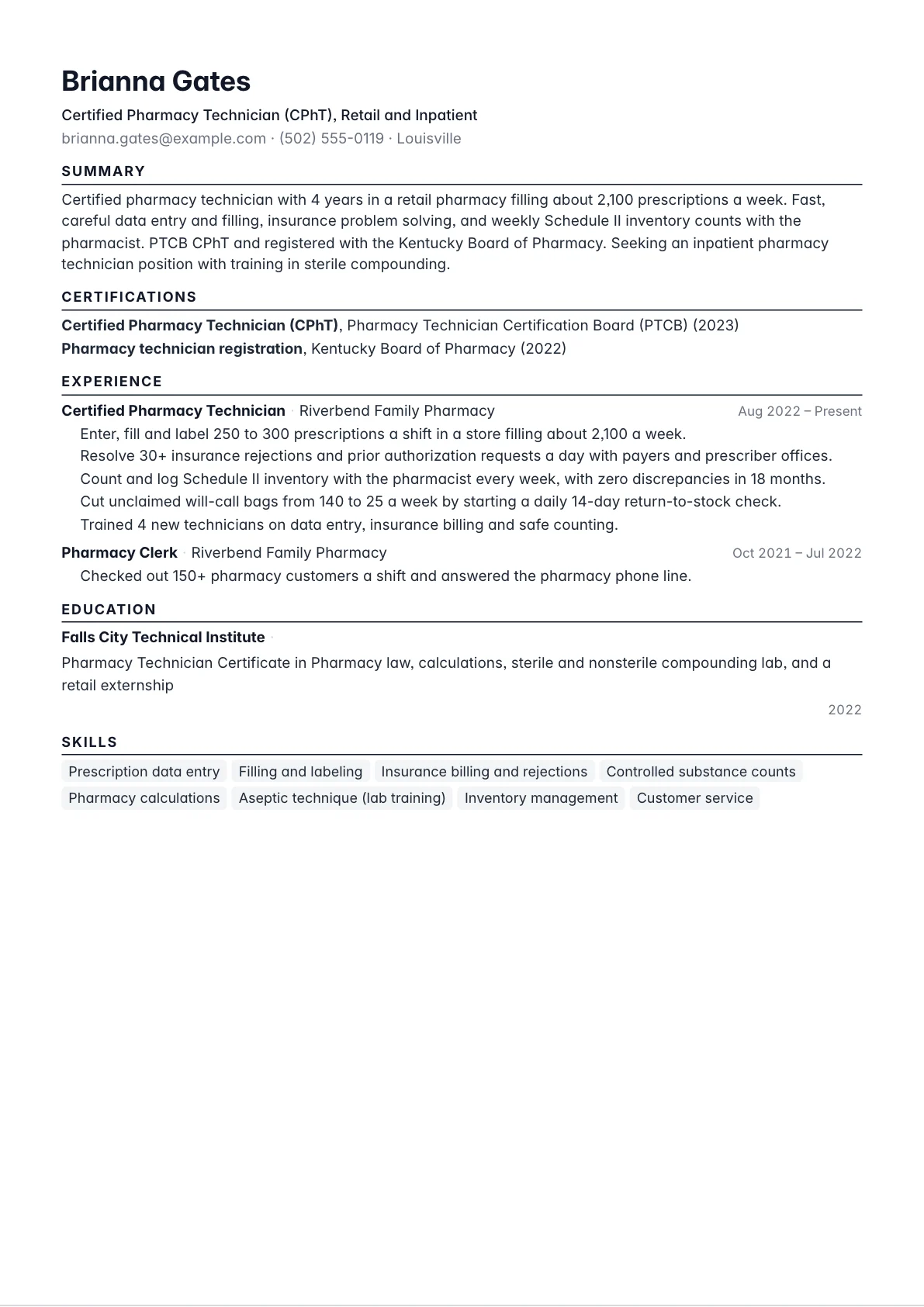
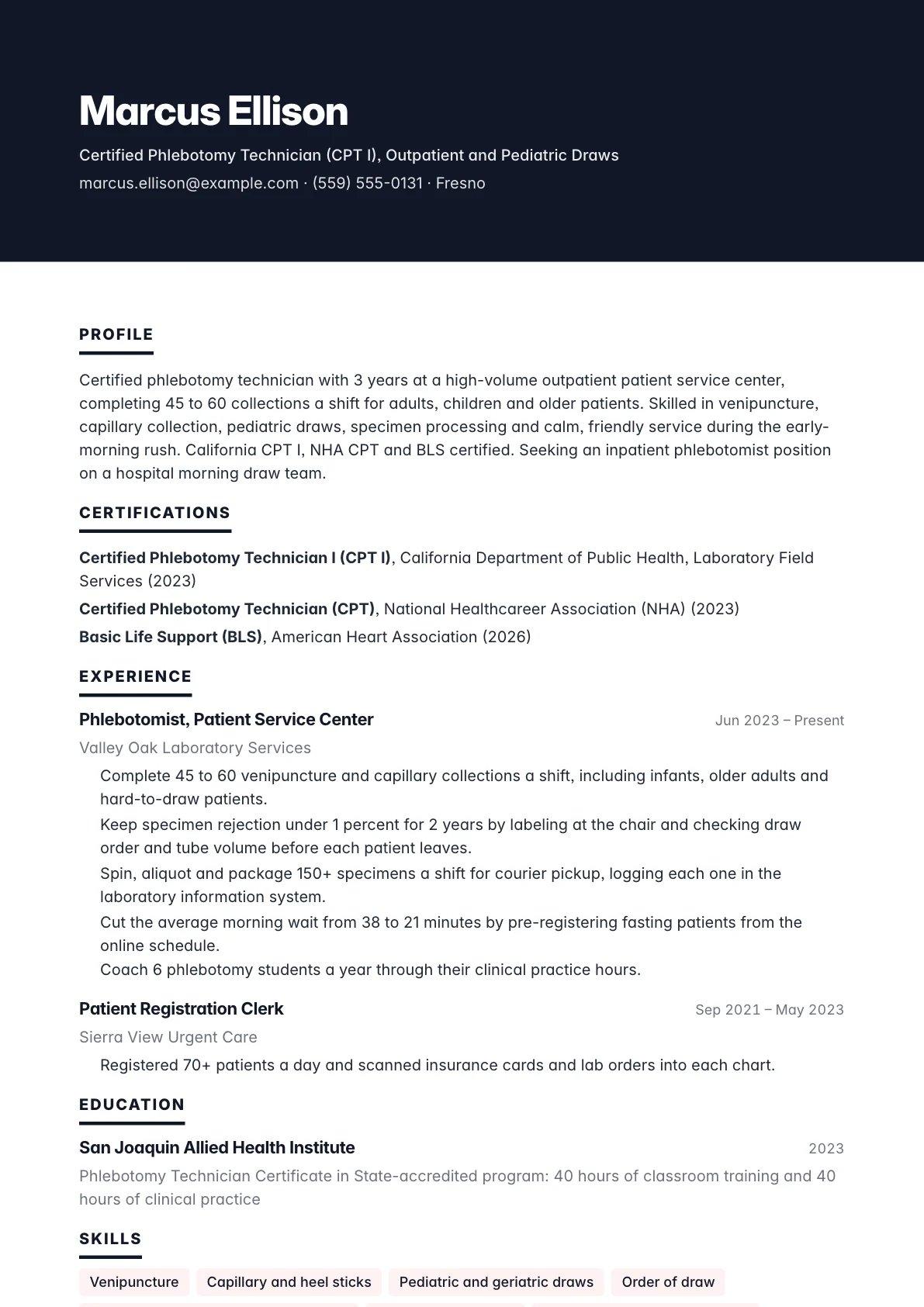
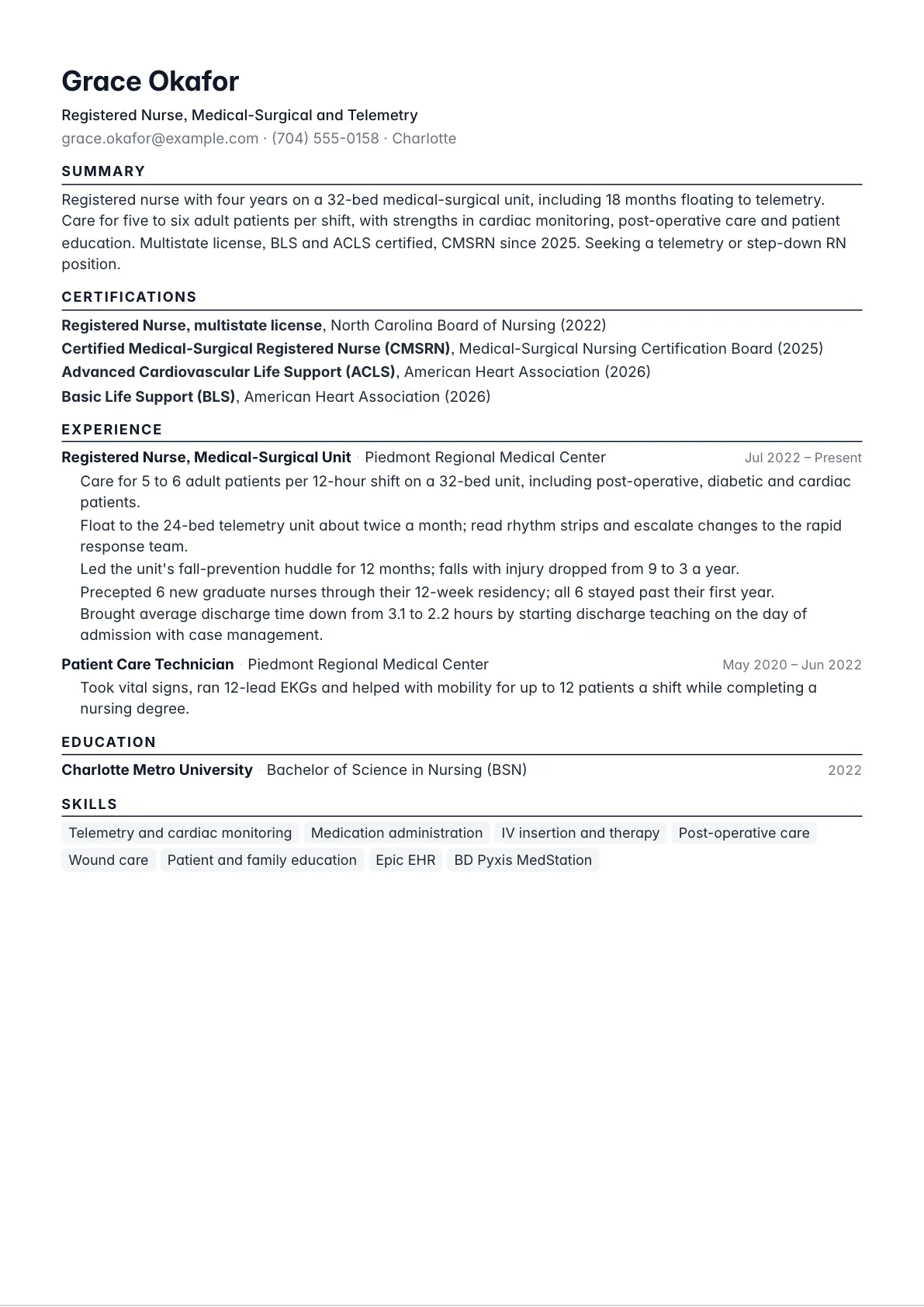
What every healthcare resume needs
Healthcare hiring is screened twice. A recruiter or the hiring system checks the requirements first, then a nurse manager, pharmacist in charge or practice manager decides whether they can picture you on their team. The strongest healthcare resumes answer both readers in this order:
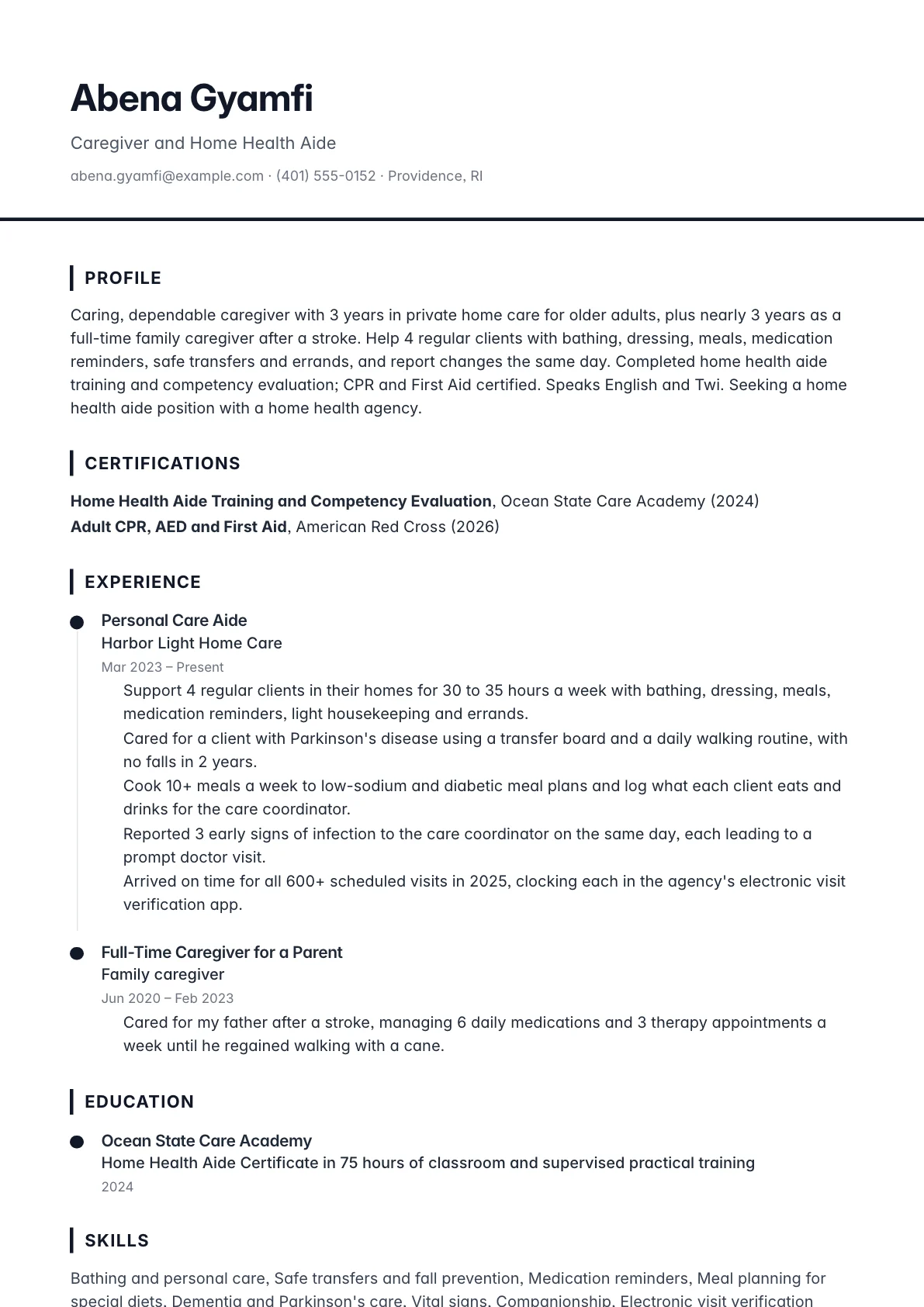
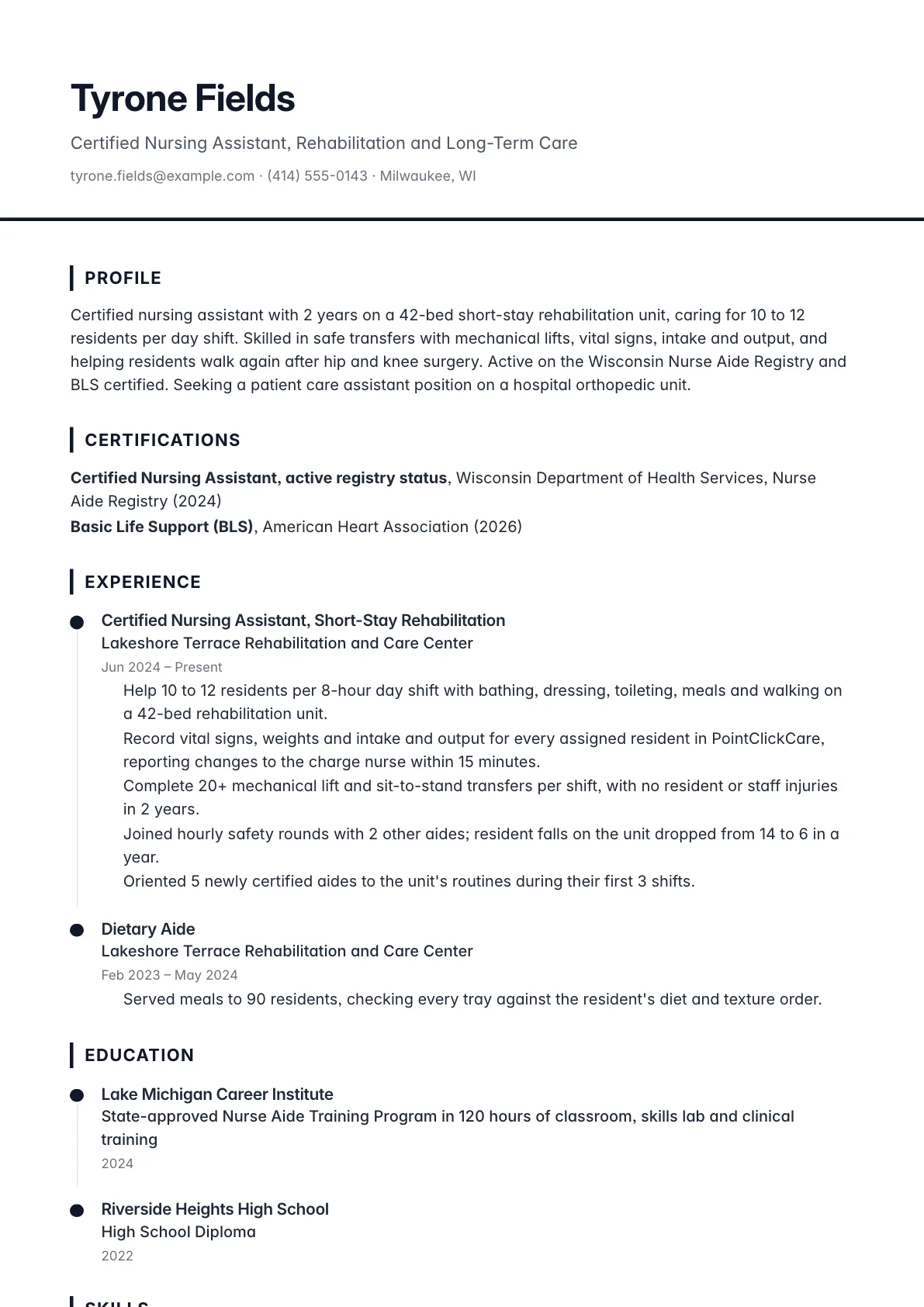
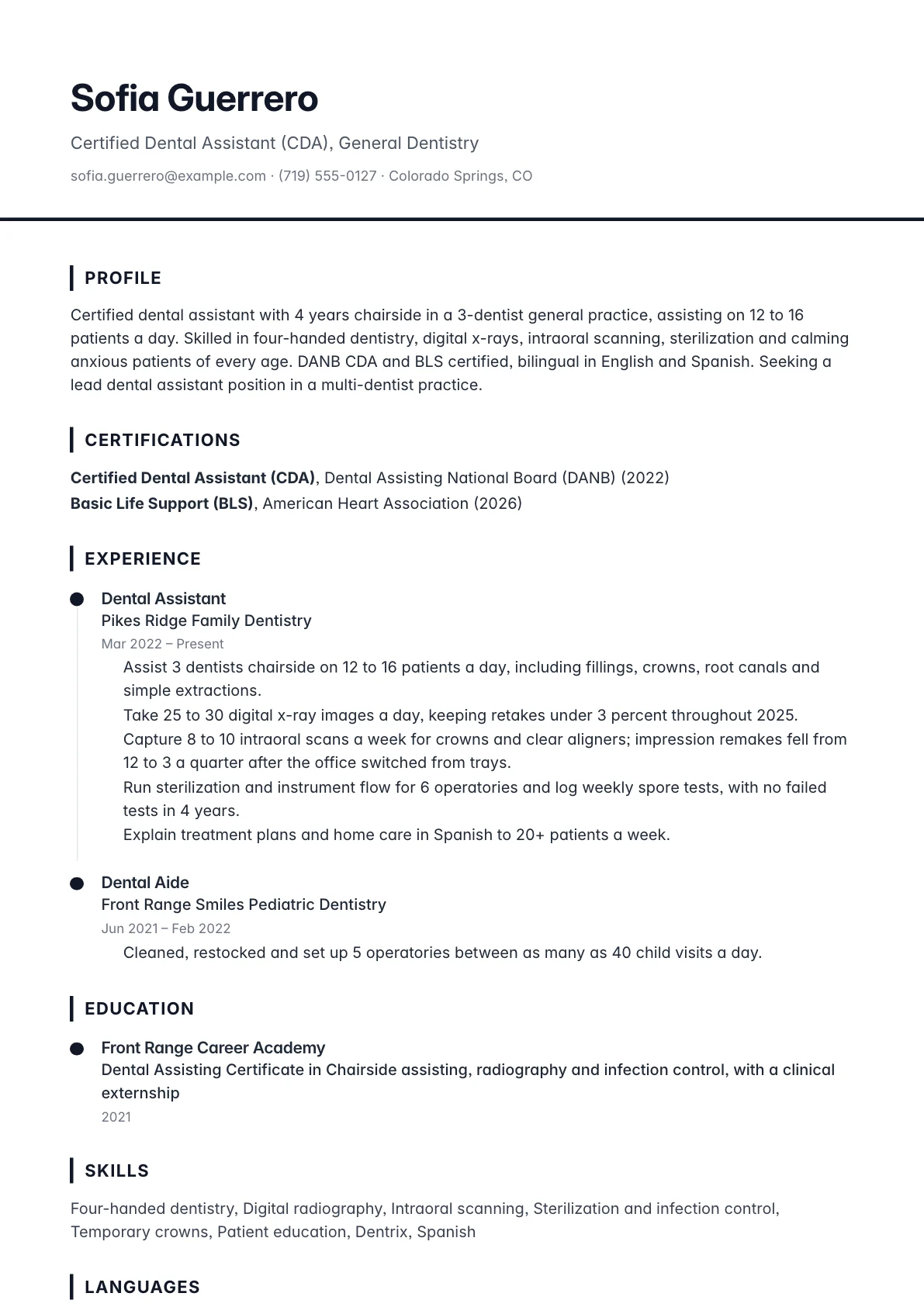
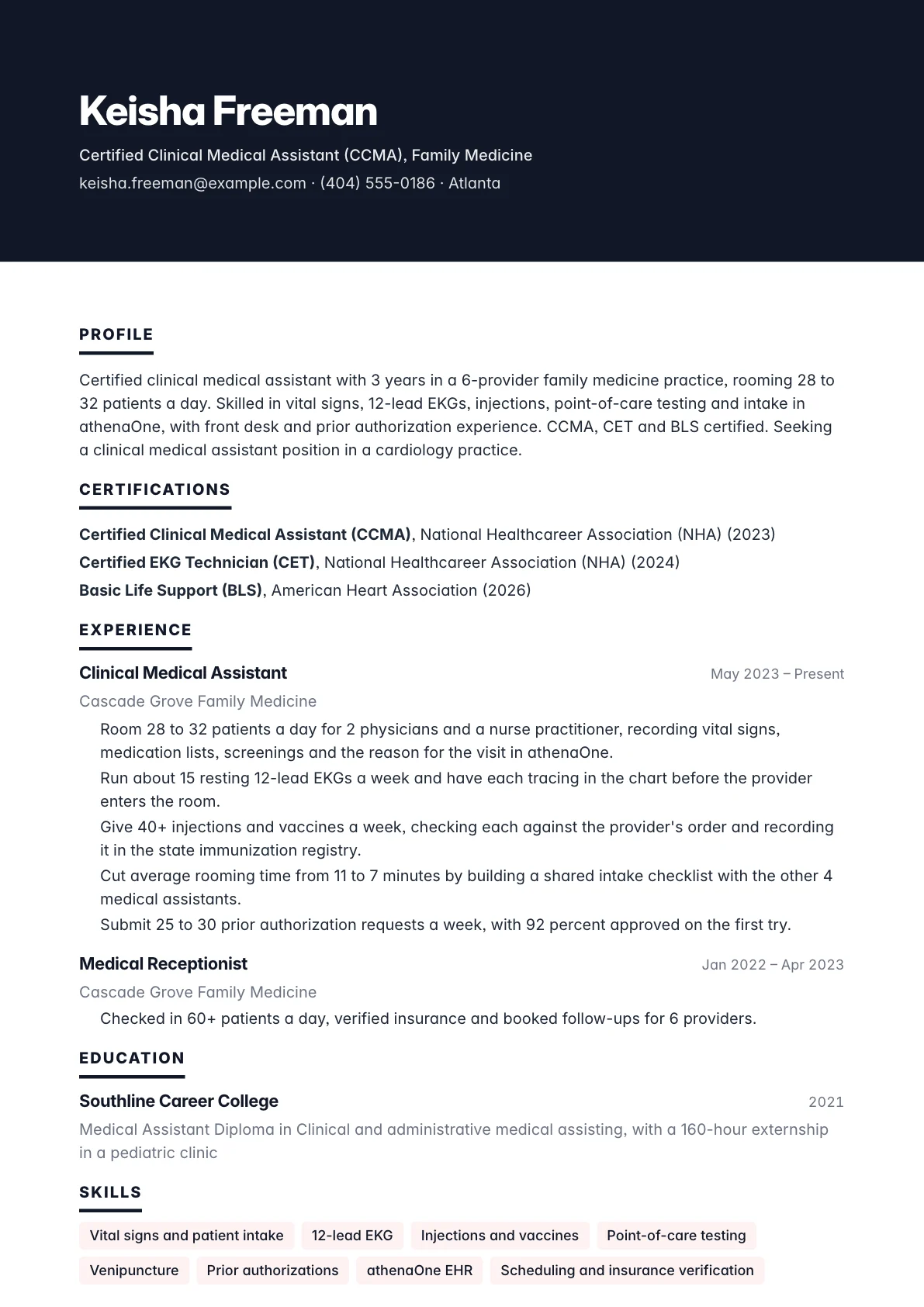
- Credentials in a section near the top. The license or certification, the body that issued it, the state, and the year. For licensed roles this is the first thing screened, so it should never sit at the bottom.
- The setting and the load. A hospital unit and its bed count, a clinic and its daily patient volume, a pharmacy and its prescriptions per day. Cared for 5 to 6 patients per shift on a 32-bed unit tells a manager more than any adjective.
- Clinical skills in the posting's words. Vital signs, venipuncture, medication administration, charting: use the exact terms the job ad uses for skills you really have, and name the record system (Epic, Oracle Health Cerner, eClinicalWorks, Dentrix) if you have used it.
- A result in most bullets. Fewer falls, faster room turnover, a higher first-stick success rate, a patient satisfaction score. Healthcare measures everything, so there is almost always a number to quote.
Keep it to one page unless you have many years across several specialties, and use a single column so dates and credentials read in the right order.
Licenses and certifications by job
Requirements differ by job and often by state. Each example page explains its own requirements and links the official source. In short:
- Registered nurse: a state RN license earned by passing the NCLEX-RN, plus Basic Life Support and often ACLS or a specialty certification.
- Nurse practitioner: a graduate degree, national board certification and a state advanced practice license.
- CNA: state-approved training and a competency exam, with your name on the state nurse aide registry.
- Medical assistant: certification such as CMA, RMA or CCMA, which many employers ask for.
- Dental assistant: rules set by each state, with DANB certifications widely recognized.
- Pharmacist: a PharmD, the NAPLEX and a state law exam, then a state license.
- Pharmacy technician: state registration or licensure, and national certification from PTCB or NHA.
- Phlebotomist: national certification, which employers commonly ask for, and a state license in California, Louisiana and Washington.
- Caregiver: home health aide training for agencies that bill Medicare, and CPR or first aid for most roles.
Which example should you start from?
Start from the job you are applying for, not the one you have now. If they are the same, use that example. If not, these paths are common:
- Getting into healthcare. Roles with short training programs, like CNA, phlebotomist, medical assistant and pharmacy technician, are the usual first step. Coming from another field? Pair the example with the career change resume guide.
- Moving up. A CNA who has just become an RN, or an RN moving into advanced practice, should start from the registered nurse or nurse practitioner example and keep the earlier role as proof of experience.
- Just licensed. The registered nurse page shows how new graduates list clinical rotations, and the recent graduate guide covers the move from school to a first full-time job in any field.
- Coming back after time away. Keep your license current, then see the employment gap guide for how to show the break.
The healthcare job market in numbers
According to the U.S. Bureau of Labor Statistics, overall employment in healthcare occupations is projected to grow much faster than the average for all occupations from 2025 to 2035, with about 1.9 million openings a year. In May 2025 the median annual wage was $86,530 for healthcare practitioners and technical workers and $38,340 for healthcare support workers, against $50,980 for all occupations. The table above compares pay and outlook for each job on this page.
Frequently asked questions
What should I put at the top of a healthcare resume?
Your name and contact details, a headline with the job title you want, a short summary, and then your licenses and certifications. For licensed roles the credential is the first thing screened, so it belongs above your work history.
How long should a healthcare resume be?
One page for most roles, including new nurses and support staff. Two pages can make sense for experienced clinicians with several specialties, charge or management duties, or research and publications.
Should I include my license number?
No. Give the license type, the issuing state and whether it is active or multistate. Employers verify licenses with the issuing board themselves, and a number on a resume only adds risk if the file is shared.
What skills do healthcare employers look for?
The clinical skills in the job posting, such as patient assessment, vital signs, medication administration or phlebotomy, the record systems you have used, and working skills shown through results: patient education, teamwork across shifts and calm under pressure.
How do I write a healthcare resume with no experience?
Lead with your training program, clinical hours and certification, then list any caregiving, volunteer or customer service work that shows reliability and people skills. The CNA, caregiver and medical assistant examples show entry-level versions.
Do healthcare employers use applicant tracking systems?
Many hospital systems and large clinic groups do. Use a single-column layout, standard headings like Licenses and Certifications and Experience, and the exact terms from the posting for skills you really have.
Should I list clinical rotations?
Yes, while you are a student or new graduate. Give the unit or department, the facility and the hours for each rotation. Once you have a year of paid experience in the role, shorten them or remove them.
Where do the pay and outlook figures come from?
From the U.S. Bureau of Labor Statistics Occupational Outlook Handbook, and from O*NET OnLine for jobs the handbook does not profile. Each example page links its exact source and shows the month the figures were checked.
Build your healthcare resume
Start from any example above or a blank page. The builder is free, no account needed, and the PDF has no watermark.
Build your resume, free